
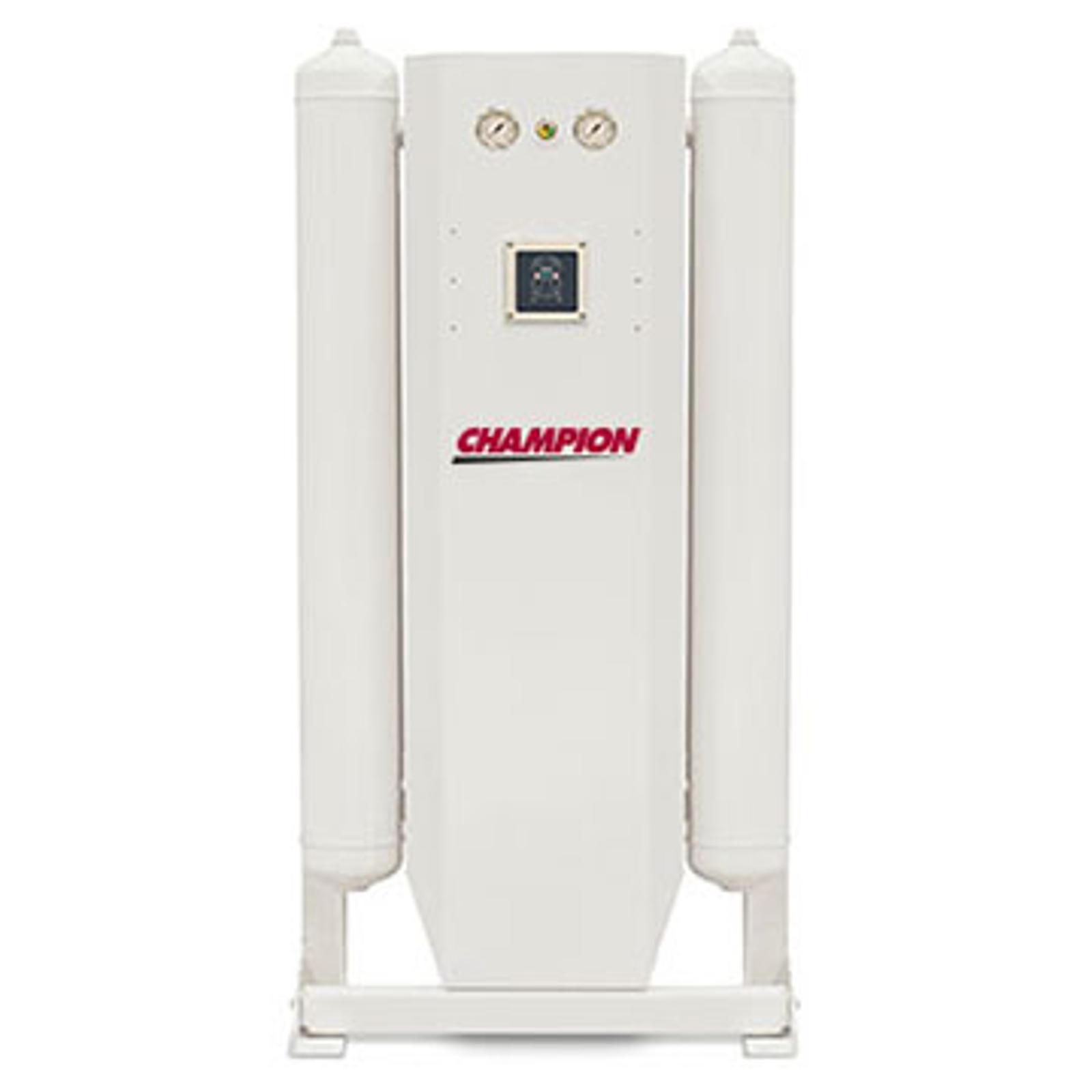
What Is a Desiccant Air Dryer?
Moisture in a compressed air system can damage pneumatic equipment, affect product quality, contribute to corrosion, and interrupt critical processes. A desiccant air dryer uses an adsorbent material to capture moisture from compressed air. Unlike a refrigerated air dryer, which cools compressed air so moisture can condense and be removed, a desiccant dryer attracts and holds water vapor on the surface of its desiccant material.
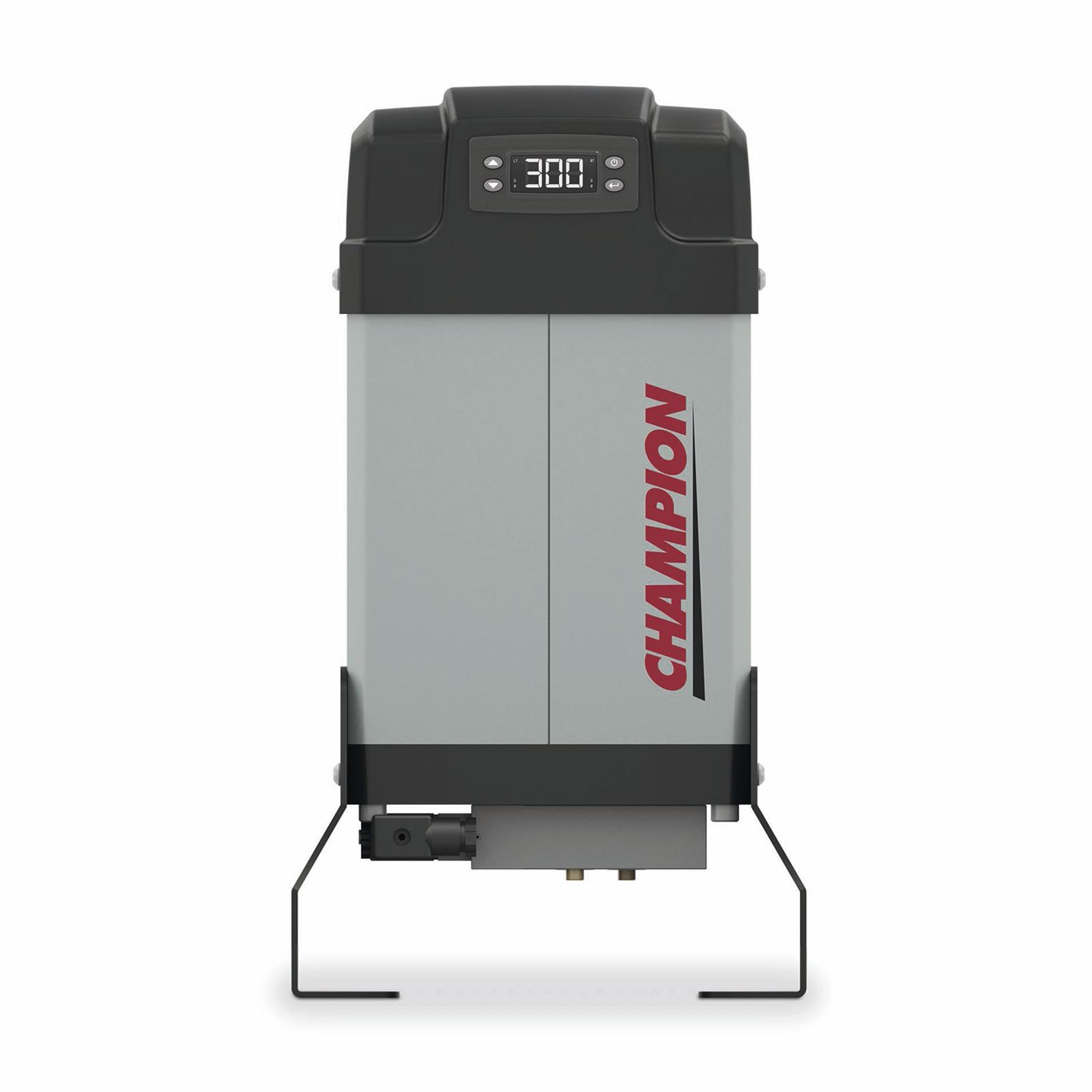
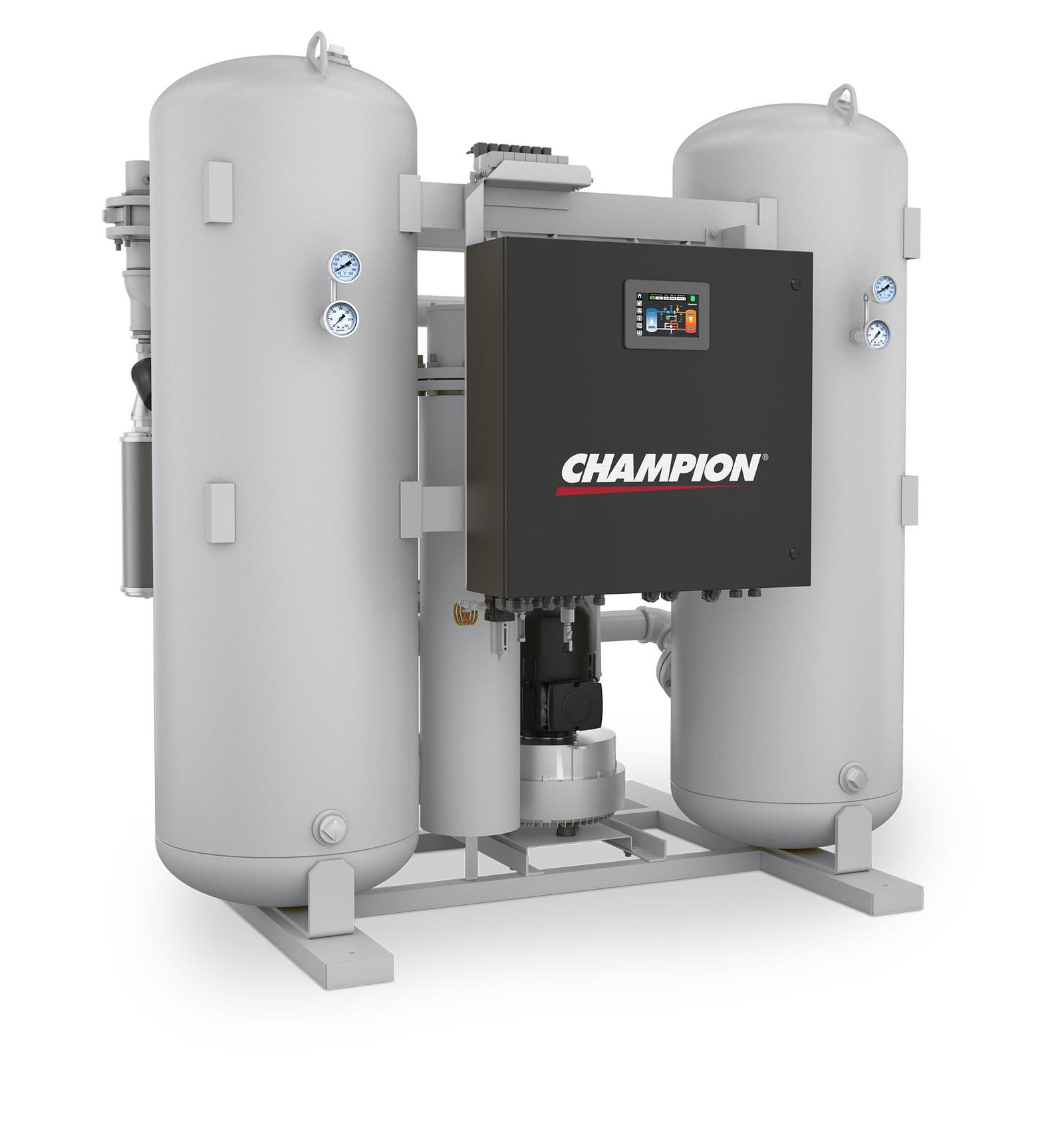
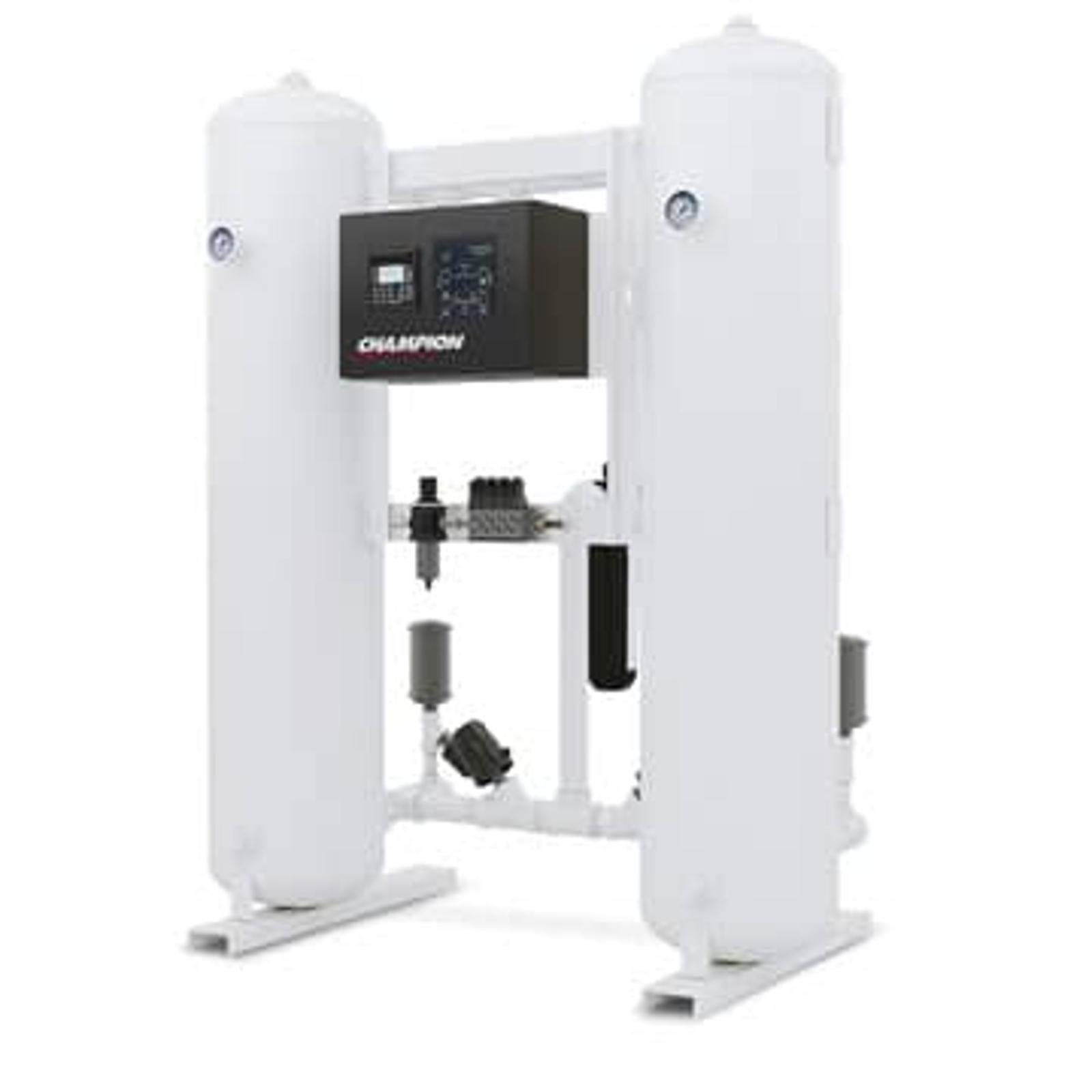
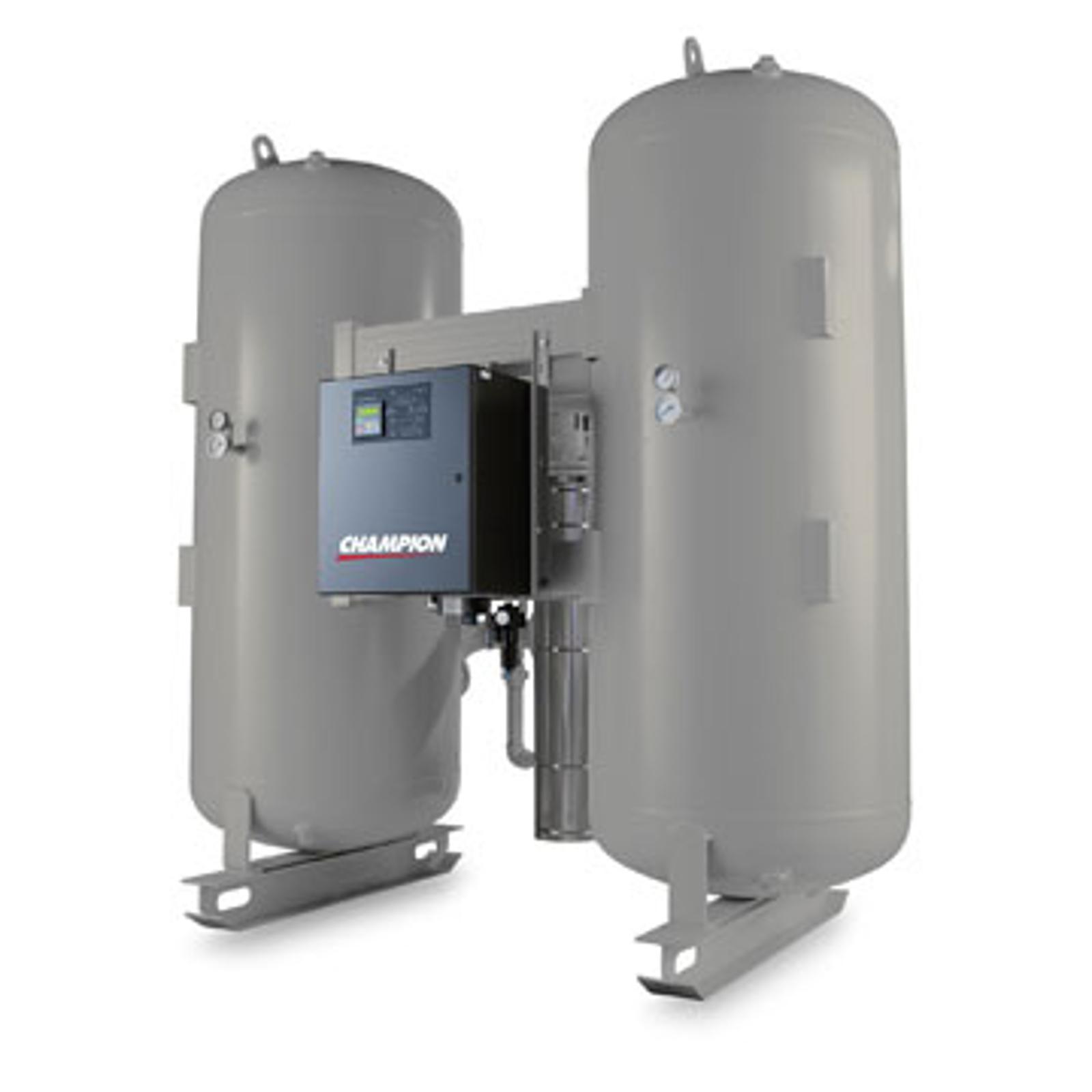
Most industrial desiccant dryers use two towers. While one tower dries the compressed air, the other regenerates the moisture-loaded desiccant. The towers alternate between drying and regeneration to provide a continuous supply of dry compressed air. Single-tower models are also available for smaller point-of-use applications.
This technology is commonly selected when an application requires a lower pressure dew point than a refrigerated dryer can provide or when compressed air lines may be exposed to low temperatures. Champion offers solutions with customizable pressure dew points, including selected models capable of reaching dew points as low as -100°F, depending on dryer series, configuration, and operating conditions.
Why Use a Desiccant Dryer in a Compressed Air System?
Water vapor may remain in compressed air even after bulk liquid water has been removed. As the air cools in downstream piping, that vapor can condense and create problems throughout the system.
Installing the appropriate desiccant air dryer can help:
Maintain the required compressed air pressure dew point
Reduce moisture in downstream piping and equipment
Help protect pneumatic tools, instruments, valves, and controls
Support consistent product and process quality
Reduce the risk of condensation in outdoor air lines
Improve compressed air reliability in moisture-sensitive applications
Provide dry compressed air close to the point of use
A properly selected dryer can also help companies avoid specifying more drying capacity than the application requires. The goal is not simply to produce the driest possible air. It is to achieve the air quality the process needs in a reliable and efficient way.