
Reciprocating vs. Rotary Compressors: Which Air Compressor Technology Is Right for You?
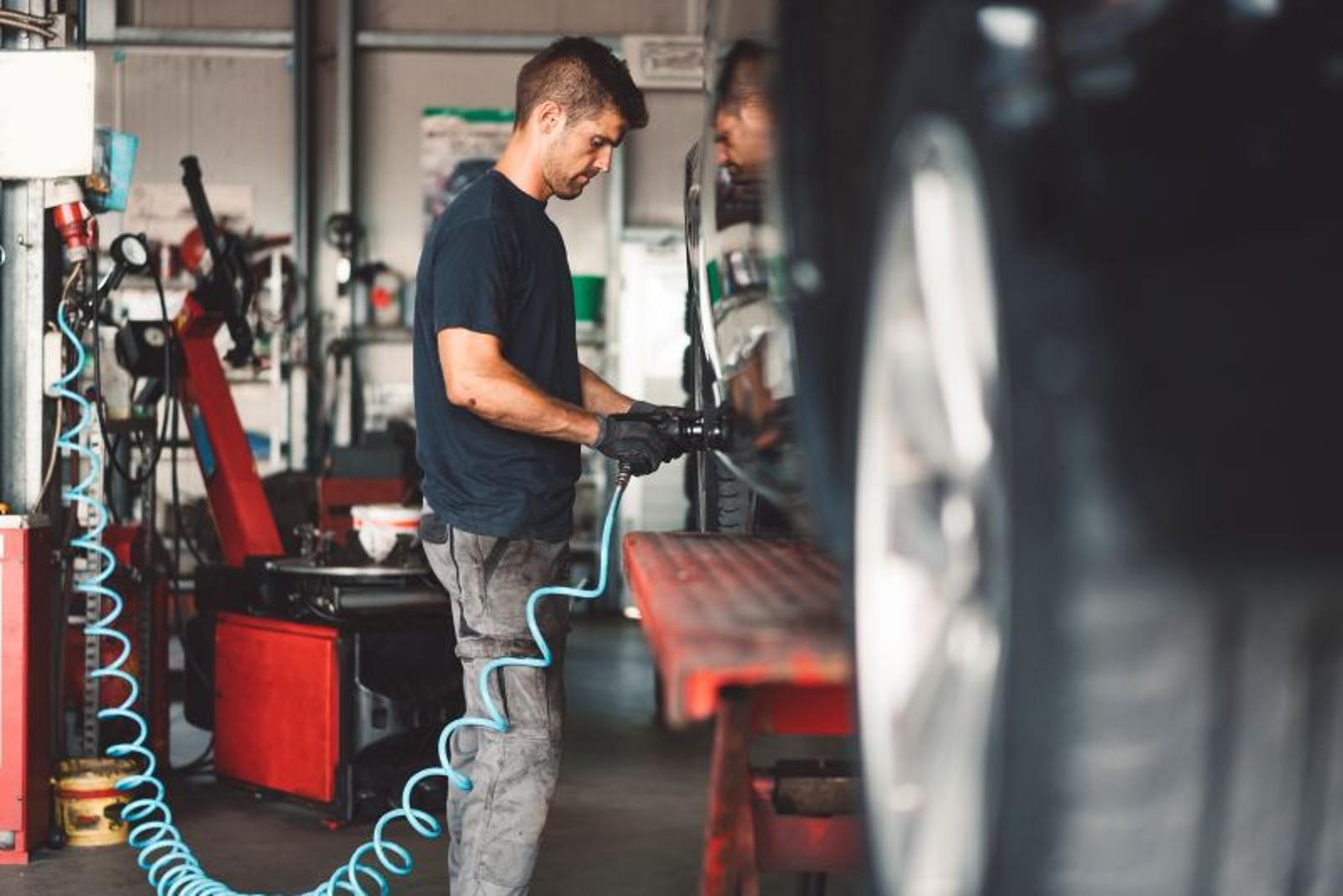
If you're comparing reciprocating vs oil lubricated rotary air compressors for your shop, here’s the quick answer: if your shop uses compressed air in short bursts—like filling tires, running impact wrenches, blowing dust off parts, cleaning workpieces, powering nailers or staplers, or supporting maintenance tasks between jobs—a reciprocating compressor can give you the performance you need at a lower cost.
But if your operation needs steady air for long stretches—like running production equipment, multiple workstations, or air tools throughout the day—a rotary compressor is usually the better fit.
Once you understand your air-use pattern, you can choose the air compressor that best fits your priorities. Maybe that means a lower upfront cost. Maybe it means quieter operation, better energy efficiency, or a machine that can keep up with continuous demand.
At Champion, we’ve been building and assembling air compressors right here in the USA since 1919. With a wide range of reciprocating and rotary options, we can help you find a compressor that delivers dependable performance, supports straightforward maintenance, and fits the way your shop works.
In this article, we’ll break down the differences between reciprocating vs. rotary air compressors so you can choose the right technology for the way your shop actually uses air.
What Is a Reciprocating Compressor?
A reciprocating compressor, often called a piston compressor, uses one or more pistons moving inside cylinders to compress air and store it for later use. It's one of the most common compressor technologies, and it’s been a staple in automotive, maintenance, and light industrial applications for decades.
Reciprocating compressors perform best in applications where air demand comes and goes throughout the day. This type of operating pattern is known as an intermittent duty cycle.
For example, a tire shop may need compressed air for tire inflation, bead seating, impact wrenches, air ratchets, and blow-off tasks. Demand spikes when several vehicles are being serviced at once, then drops when bays are empty or technicians are doing non-air-tool work. That start-and-stop pattern is exactly where a reciprocating compressor can make practical sense.
Reciprocating compressors are typically designed for duty cycles in the 70-80% range.
Pros of a Reciprocating Compressor
Lower upfront cost. The sticker price on reciprocating air compressors is typically lower than rotary compressors. If you need a compressor that gets the job done, then there’s no need to pay more for compressor technology than you actually need.
Performs well in rugged environments. Their straightforward mechanical design can make them a good fit for dusty, dirty, or demanding work environments.
Lower maintenance costs. Reciprocating compressors have fewer moving parts and fewer items to service, making upkeep quick and easy.
Proven technology. Piston compressors have been used across industries for decades. They’re tried and true and will keep your operation moving.
Built for shops that use air in bursts. If your team uses air tools heavily for a few minutes, then gives the compressor time to recover, a reciprocating compressor can deliver the performance you need without paying for more machine than the job requires.
Cons of a Reciprocating Compressor
Not designed for continuous operation. Most reciprocating compressors are intended for intermittent duty cycles rather than running nonstop throughout a shift. If you run one nonstop, it can overheat, wear out faster, and struggle to maintain pressure.
Louder operation. A reciprocating compressor is loud enough to have to raise your voice to talk to anyone in your shop. At 80-90 decibels, it is as loud as a lawn mower or shop vac running nearby.
But noise doesn't always require moving to a rotary compressor. Quiet enclosed reciprocating compressors are surrounded by 2-inch foam on external panels, making them as quiet as rotary compressors while keeping a lower price point than rotary.
Recovery time required between demand spikes. A reciprocating compressor needs time to rebuild tank pressure after periods of heavy air usage.
Limited horsepower range. Most reciprocating compressors top out around 30 HP. If your air demand is bigger than that, you should probably look into rotary.
Who Is a Reciprocating Compressor Best For?
Reciprocating compressors are a strong fit for shops where air demand is important, but not constant:
- Tire shops using air for tire inflation, bead seating, impact wrenches, air ratchets, and blow-off between vehicles
- Small body shops using air for sanding, spray guns, panel prep, and general pneumatic tools at a few workstations
- Woodworking shops using nailers, staplers, sanders, blow-off, and finishing support
- Metal fabrication shops using grinders, cutting tools, pneumatic hand tools, and cleanup air
- Car washes using compressed air for control valves, door systems, prep stations, drying assistance, and periodic maintenance tasks
- Maintenance departments using air for repairs, filter changes, cleaning, pneumatic hand tools, and equipment service throughout the day
- General-purpose workshops where the compressor supports several tasks but is not feeding production equipment nonstop
What Is a Rotary Compressor?
Rotary compressors use continuously rotating components to compress air and deliver a steady flow of compressed air. Unlike reciprocating compressors, which rely on pistons moving up and down, rotary technologies generate airflow through smooth rotary motion, resulting in quieter operation and continuous-duty performance.
The two most common oil-lubricated rotary compressor technologies are:
- Rotary vane compressors, which use sliding vanes inside a rotating rotor to create compression chambers.
- Rotary screw compressors, which use two interlocking rotors that continuously mesh together to compress air.
Both rotary vane and rotary screw compressors are designed for 100% duty-cycle operation, making them well suited for facilities that need continuous compressed air throughout the workday.
Pros of Rotary Compressors
Continuous-duty performance. You won’t have to wait for this one to catch up. Rotary compressors are built to keep running all day, so your shop can keep moving.
Quieter operation. Rotary compressors are much quieter at 65-75 decibels. Think more like vacuum cleaner levels, less like a lawn mower. And you can get them enclosed to help bring down sound levels even more.
Consistent airflow. If your shop has air tools running all day, you don’t have time to wait for pressure to build back up. Rotary air compressors can run nonstop.
Variable-speed options. A variable-speed rotary compressor can help keep energy costs in check. It ramps up when the shop is busy and backs off when demand slows down, so the system isn’t working harder than it has to.
Cons of Rotary Compressors
Higher upfront cost. Rotary compressors generally cost more than reciprocating compressors, especially as capacity increases.
May be unnecessary for intermittent demand. If your horsepower needs are low and your shop only uses air in bursts, you may not need to spend more on a rotary compressor. Reciprocating technology could get the job done for less.
Who Are Rotary Compressors Best For?
Rotary compressors are commonly used when air demand is steady, frequent, or tied directly to production:
- Manufacturing facilities using compressed air to run pneumatic actuators, packaging equipment, conveyors, blow-off stations, and production tools
- Continuous-production environments where a drop in air pressure can slow equipment, interrupt output, or create quality issues
- Multi-shift operations where the compressor may need to support air demand for most of the workday
- Large body shops running multiple sanders, spray booths, prep stations, and pneumatic tools across several bays at the same time
Compressor Technology Comparison
Feature | Reciprocating | Rotary Screw |
|---|---|---|
Duty Cycle | 70-80% | 100% |
Best Demand Profile | Intermittent | Continuous |
Upfront Cost | Lower | Higher |
Noise Level | Higher | Lower |
Dirty/Rugged Environments | Excellent | Good |
Energy Efficiency | Good | Excellent, especially with variable-speed options |
Continuous Operation | Limited | Yes |
Typical Applications | Tire shops, body shops, car washes | Industrial manufacturing, large body shops |
Finding the Best Champion Air Compressor for Your Needs
Choosing the right compressor is not about buying the biggest machine or the newest technology. It’s about matching the compressor to the way your shop actually works. Champion is built for buyers who want straight answers, practical options, and equipment that earns its keep.
If you are looking for an air compressor that is easy to install, easy to maintain, and realistic for a working shop budget, Champion is worth a look. Champion designs, manufactures, and assembles compressed air products in the USA, and the brand has built its reputation on dependable performance without unnecessary complexity.
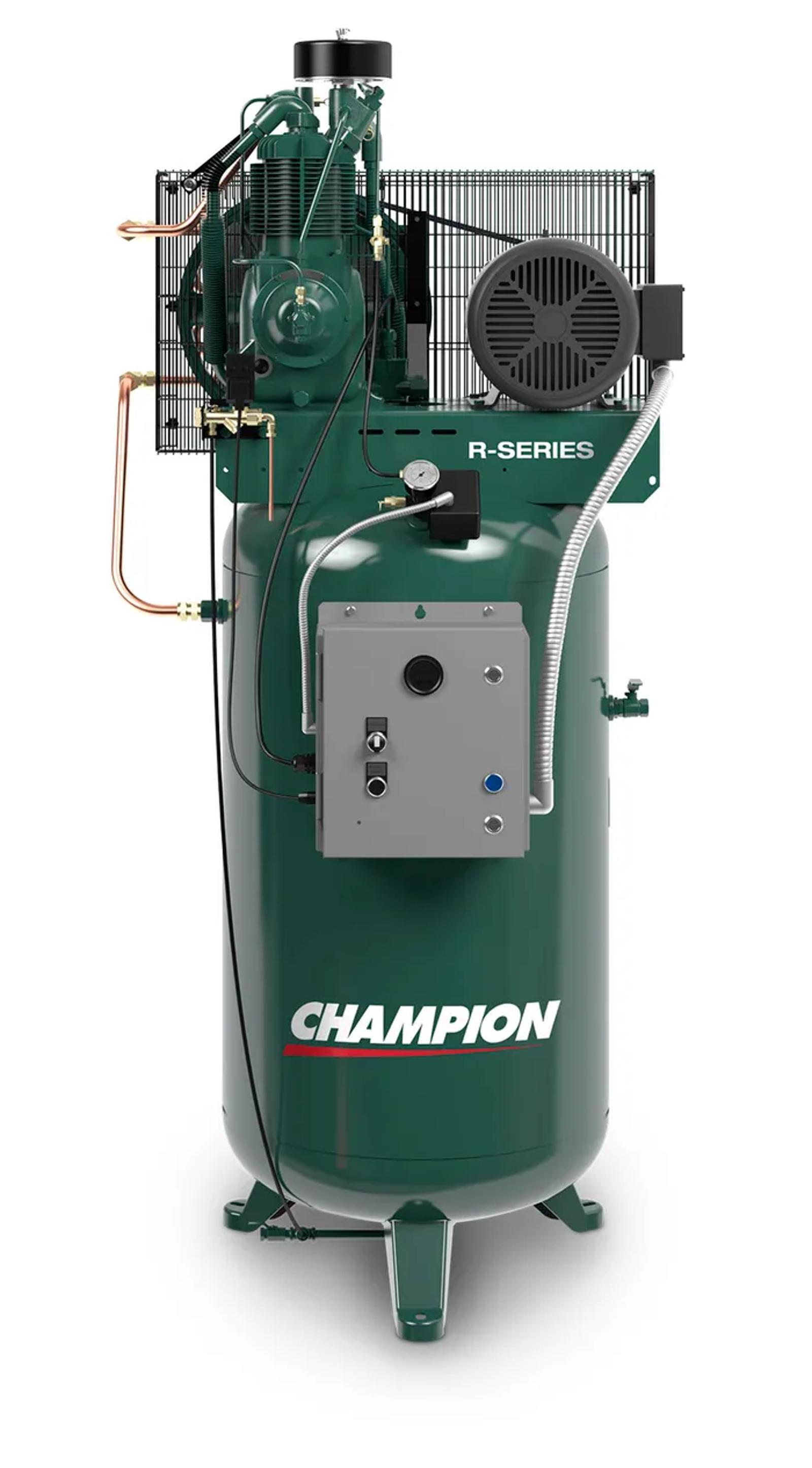
R-Series Lubricated Reciprocating Air Compressor
Champion R-Series Compressors are a practical fit for shops that want proven piston-compressor performance, rugged construction, and strong value. Think tire service, small automotive repair, maintenance departments, and general shop environments where air demand is important but not nonstop.
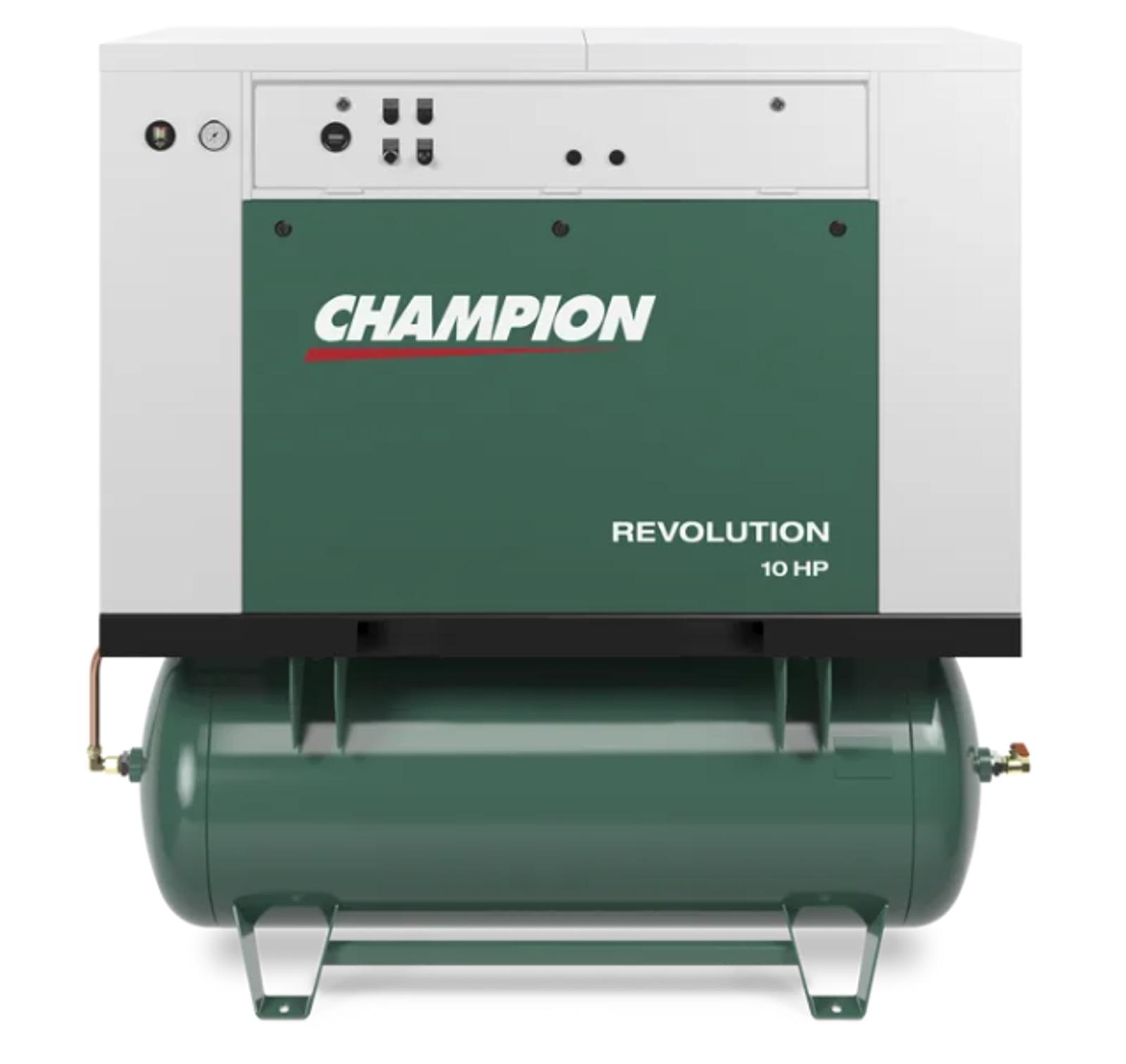
Revolution Quiet Enclosed Reciprocating Air Compressor
The Revolution is for shops that like the cost and serviceability advantages of reciprocating technology but need a quieter package. It can be a smart option for service shops, labs, schools, or maintenance areas where the compressor sits near people and noise matters.
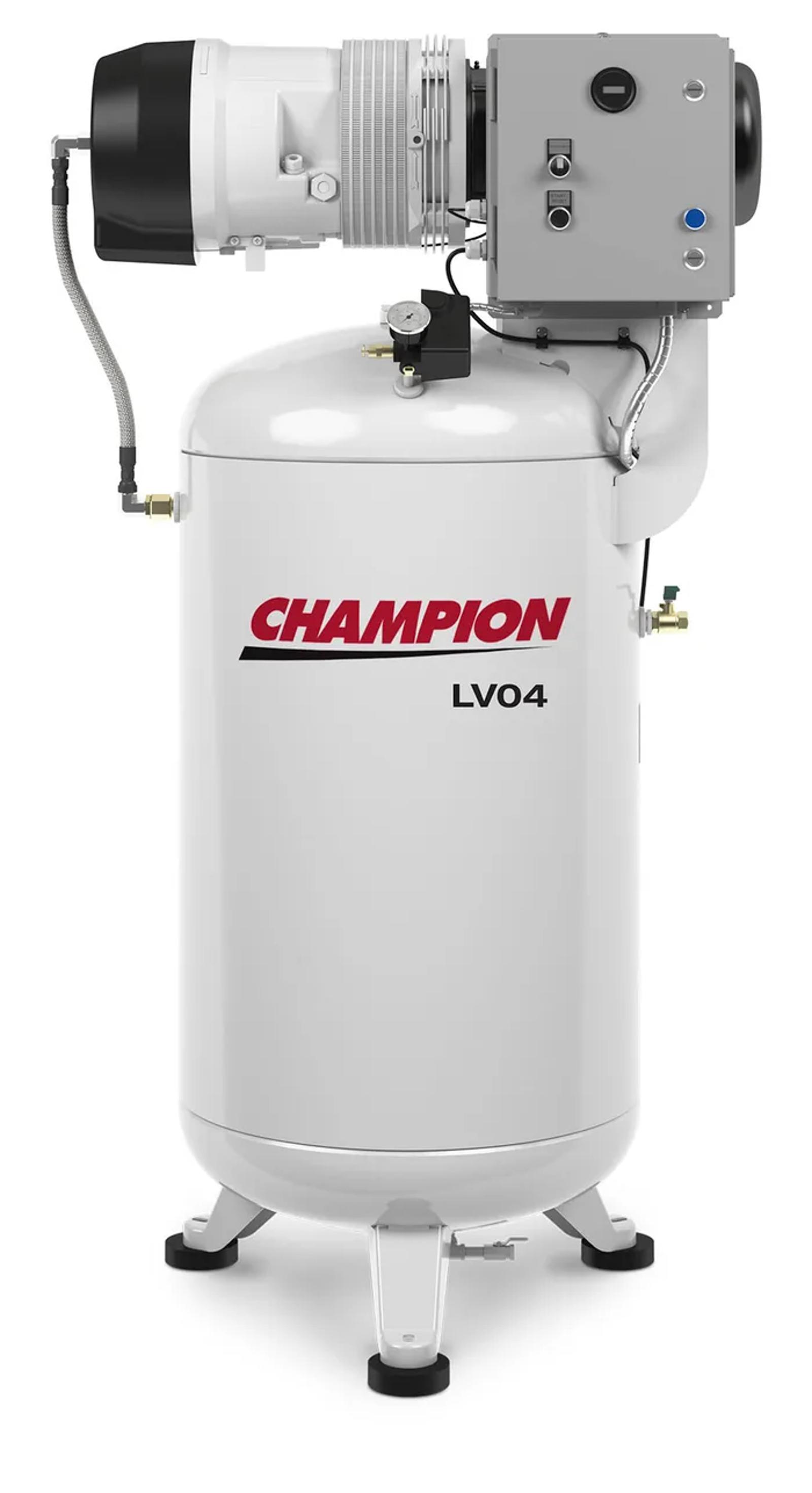
LV/LVR Series Oil Lubricated Rotary Vane Compressors
The LV/LVR Series has the smallest footprint of any rotary compressor in the industry. Their compact, simple, robust and integrated design allows them to fit anywhere undercover. They are easy to maintain and install, and are extremely quiet. The LV/LVR Series is available in either tripod or tank mounted versions. They are designed for a wide variety of applications including automotive, car body shops, wood working, dentistry, laundry, packaging and machine tools.
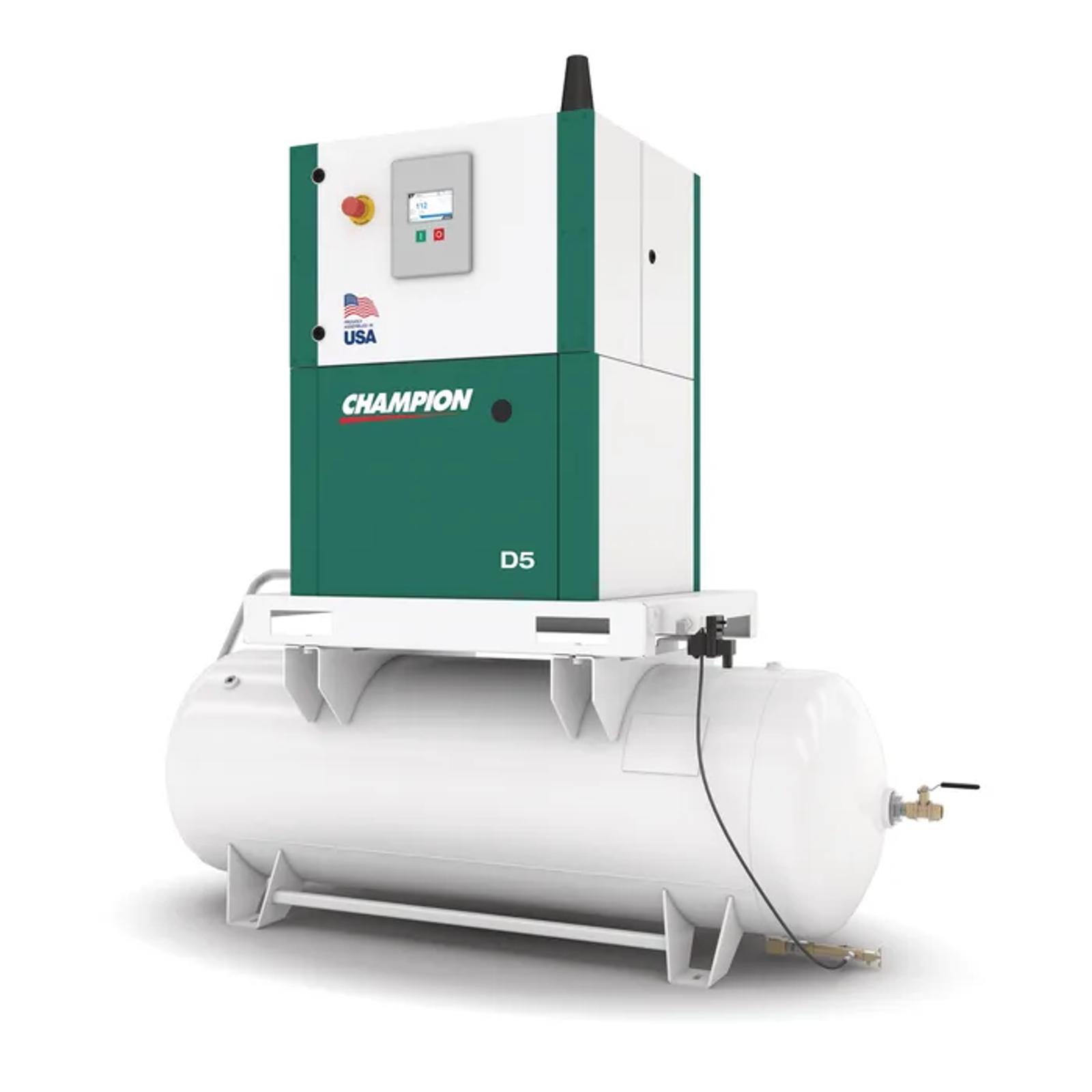
D Series Oil Lubricated Fixed Speed Rotary Screw Compressors
The Champion D Series offers a line of compact, quiet compressors that are ideal for demanding environments where continuous-use applications require dry, clean compressed air. The whisper-quiet enclosed design ensures you can place the unit near the point-of-use without worrying about elevated noise levels. This allows you to work comfortably 24/7. And best of all, it's affordable.
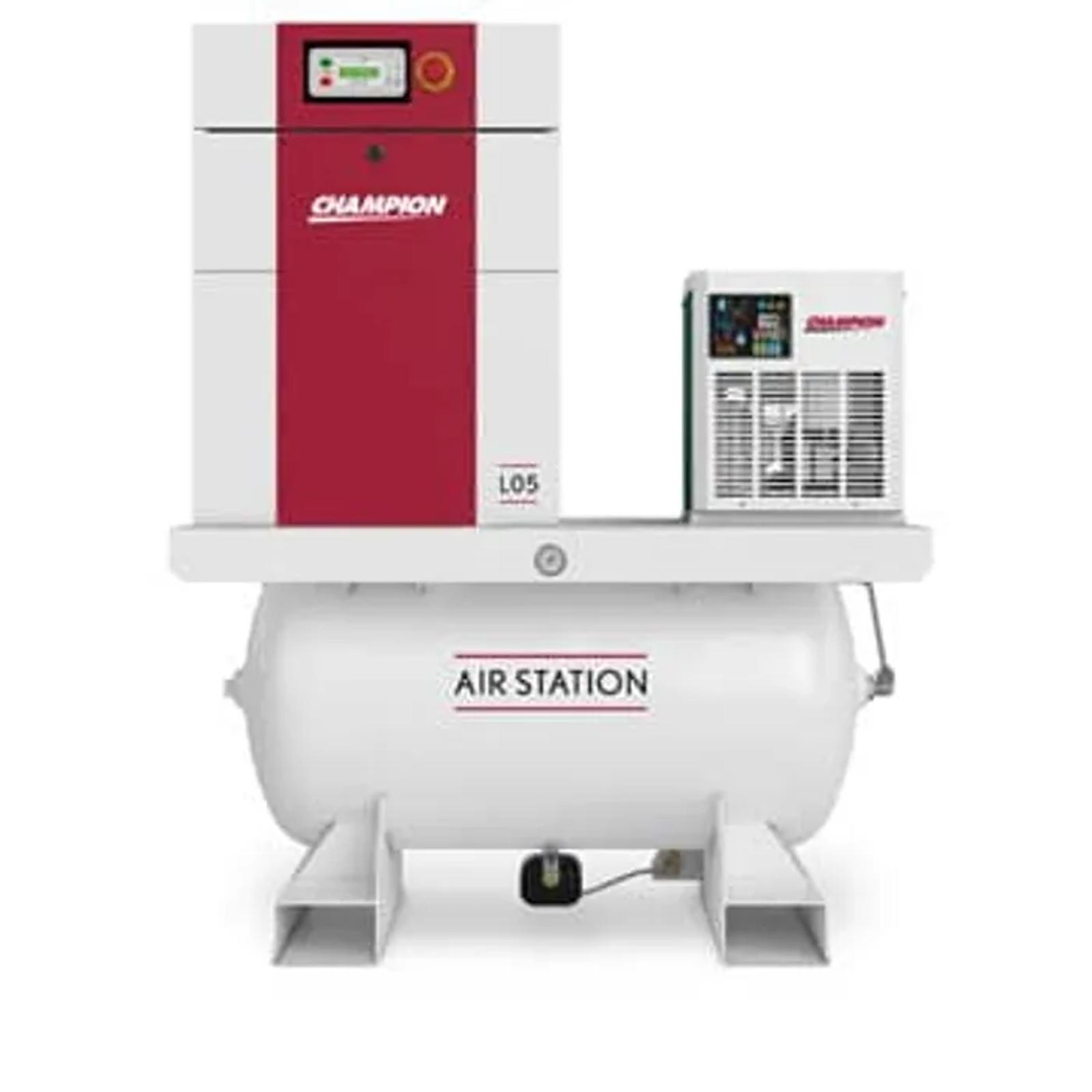
L-Series Oil Lubricated Rotary Screw Compressors
Champion's L-Series line of fixed speed compressors combine simplicity with cutting edge design resulting in a compressor that delivers superior performance with unprecedented serviceability.
Frequently Asked Questions
The primary difference is how air is compressed. Reciprocating compressors use pistons moving inside cylinders, while rotary compressors use continuously rotating components. Rotary vane and rotary screw compressors are both rotary technologies.
REACH OUT TO US